

Following Telangana’s landmark decision earlier this year to introduce a temporary ban on paraquat — a highly hazardous pesticide — CPSP Project and Policy Officer Dhannya V. Sasi retraces the steps that led to this move and considers its potential impact.
*Warning: This article discusses suicidal behaviour. If you have questions on self-harm or feel suicidal, use this link to find an international helpline.*
Change often begins quietly.
A patient arrives at the emergency department — often conscious, sometimes even speaking. There is hope for both the family and the treating team. But within hours, that hope begins to fade.
Over the next few days, despite intensive care, the patient’s condition deteriorates rapidly. The lungs stiffen, the kidneys fail, and multiple organs begin to shut down. Doctors continue treatment, but with a quiet understanding: there is no specific antidote, and very little that can reverse what has already begun. Families witness this progression first hand — helpless, confused, and unprepared for the speed and severity of decline.
This is the reality of paraquat poisoning. Sadly, in Telangana, it had become an increasingly familiar and deeply troubling pattern.
The problem of pesticide poisoning
Estimates reported in The Times of India, based on evidence from the Indian Medical Association (Telangana) and Doctors Against Paraquat Poisoning, suggest thousands of deaths annually from pesticide poisoning in the state, with paraquat accounting for a disproportionate share of cases.
This concern is echoed at the national level. Data from the National Crime Records Bureau (NCRB) consistently shows that poisoning — particularly pesticide ingestion — remains one of the leading methods of suicide in India, accounting for a significant proportion of total suicide deaths each year.
These patterns highlight the critical role that access to highly hazardous pesticides plays in shaping mortality outcomes. Evidence from countries across the world consistently shows that restricting access to these pesticides is one of the most effective ways to reduce suicide deaths.
A turning point
Over the past year, concerns among clinicians in the State of Telangana evolved into a coordinated movement. What began as conversations within hospital corridors grew into legal advocacy, political engagement, media outreach, and community awareness.
These efforts brought together doctors, policymakers, researchers, and communities around a shared goal: preventing avoidable deaths.
A key turning point came on the 19th of February 2026, with the filing of a Public Interest Litigation (PIL) in the Telangana High Court. This marked a shift from concern to accountability, bringing the issue into the legal and policy domain and requiring both State and Union authorities to respond.
Building momentum
In the days that followed, we engaged with stakeholders across political parties, sharing clinical insights and emerging evidence on paraquat poisoning. We discussed the severe and often irreversible outcomes, the absence of an antidote, the immense strain on healthcare systems, and the existence of safer alternatives.
What stood out was a genuine willingness among policymakers to listen and engage. The issue quickly gained political attention and was taken up for discussion in the State Assembly.
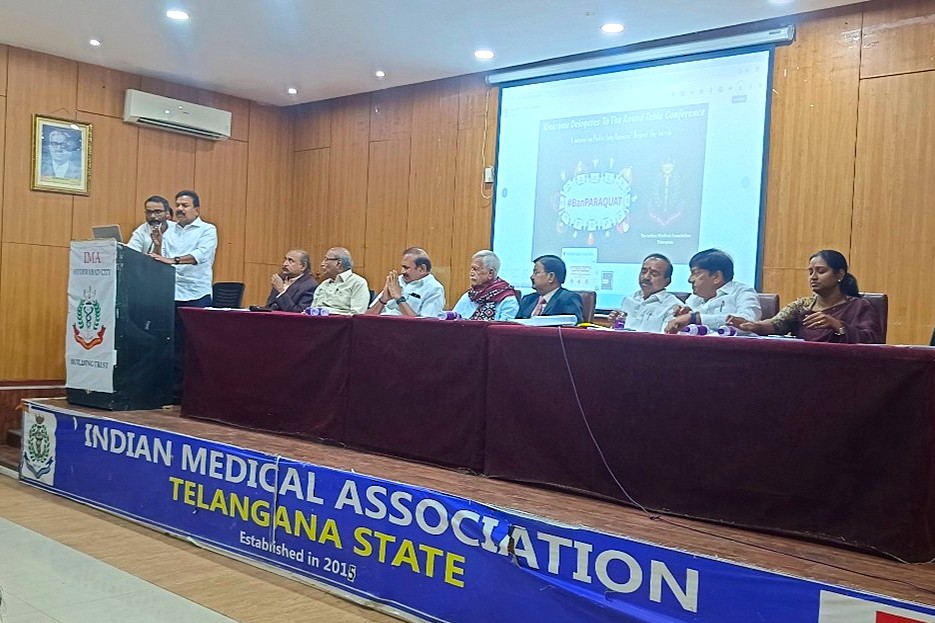
The medical community became a powerful force in driving this momentum forward. This included a conference on the 3rd March 2026, organised by the Indian Medical Association (IMA), Telangana, and the Doctors Association Against Paraquat Poisoning (DAPP), which brought together doctors, public representatives, and public health experts.
While clinical insights highlighted the severity of poisoning cases, it was the voices of families that resonated most deeply. Their testimonies — of watching loved ones deteriorate despite medical care — brought a human dimension that statistics alone cannot capture. These stories reinforced a critical truth: these deaths are not inevitable — they are preventable.
While these discussions were unfolding, public awareness was also building through campaigns and media coverage. What had once been seen as isolated incidents increasingly came to be understood as a broader public health concern.
Bringing together health and agriculture
A significant step forward came on the 11th March 2026, with a roundtable discussion convened by the Telangana Agriculture and Farmers Welfare Commission.
Bringing together experts from health, agriculture, and policy, the discussion reinforced a vital message: paraquat cannot be addressed in silos. It is both a public health issue and an agricultural issue, with implications for farmer safety, environmental sustainability, and healthcare systems.
Discussions highlighted not only the severe health impacts of paraquat exposure, but also its broader effects on soil health and long-term agricultural productivity. Importantly, there was consensus that safer alternatives — such as integrated weed management and mechanical methods — are available and viable with the right support.
The meeting also led to the development of key evidence-based documents to support policy decision-making, combining clinical data, public health evidence, and practical agricultural solutions. These efforts helped translate on the ground experience into actionable policy insights.
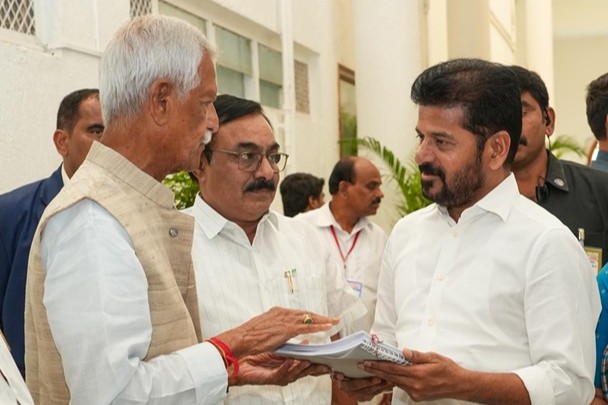
With leadership committing to escalating the issue to the Chief Minister, the conversation shifted from dialogue to decisive action.
A crucial pesticide ban
Less than three weeks later, on the 31st March 2026, the issue reached a decisive moment as Telangana implemented a 60-day state ban on paraquat.
While temporary, this decision is of immense importance. It represents a critical public health intervention with immediate life-saving potential.
In the short term, it reduces access to a highly hazardous pesticide — potentially preventing poisoning cases and easing pressure on emergency and critical care services. It also creates space for farmers and agricultural systems to begin transitioning toward safer alternatives.
The need for effective implementation
However, the success of this ban will depend on how effectively it is implemented.
Enforcement will require coordinated action across departments, including agriculture, regulatory authorities, and local administration. This may involve restricting the sale and distribution of paraquat, monitoring supply chains, issuing clear guidance to retailers, and ensuring compliance through inspections at the district level.
At the same time, challenges are likely to emerge. Resistance from sections of the agricultural sector, concerns about the cost and effectiveness of alternatives, and the risk of informal supply channels could pose barriers to sustained implementation. Addressing these concerns will be essential to ensure that the ban is both practical and equitable.
A catalyst for further change?
More broadly, the ban serves as a powerful policy signal. It demonstrates that states can act decisively in the face of clear public health risk, even within existing regulatory frameworks.
The ban also creates an opportunity to generate further evidence — on reduced incidence of poisoning, feasibility of alternatives, and implementation challenges — that can inform longer-term decisions.
If sustained and built upon, this step could catalyse broader regulatory change in India. Telangana’s action has the potential to influence other states facing similar challenges and strengthen the case for a national-level ban on paraquat — one that aligns agricultural practices with public health priorities.
At its core, this effort is driven by a simple but urgent truth: every paraquat poisoning represents a preventable loss. This 60-day ban may be a first step — but it marks a decisive shift toward preventing avoidable deaths and advancing safer agricultural practices.

CPSP Project & Policy Officer
Dhannya V Sasi is a public health specialist . She has worked on global healthcare projects both in the public and in the private sector worldwide. Her passions range from helping strengthen health systems to bridge gaps to address social determinants of unmet healthcare needs to building partnerships that bring together resources and expertise from government and non-governmental stakeholders to identify issues, find answers, and drive change.
Further Reading
NEWS: Myanmar and Telangana Take Action to Restrict Highly Hazardous Pesticides
BLOG: Pesticide poisoning in India: prevalence, challenges & opportunities
PUBLICATION: Paraquat at 63 – the story of a controversial herbicide and its regulations (external link)
POLICY BRIEF: Powers of states to prevent pesticide-related harms in India